
01
Mobile Product & Experience Engineering
Translate business workflows and user needs into focused mobile journeys, interaction patterns and application structures designed around real tasks rather than desktop screens compressed onto a phone.
We engineer secure, reliable mobile applications as part of the wider business platform — connecting customers and employees to the systems, workflows and services they need, with architecture designed for performance, maintainability and controlled evolution.
A mobile application creates value when the experience on the device is connected cleanly to the services, data and operating processes behind it. That requires more than interface development.
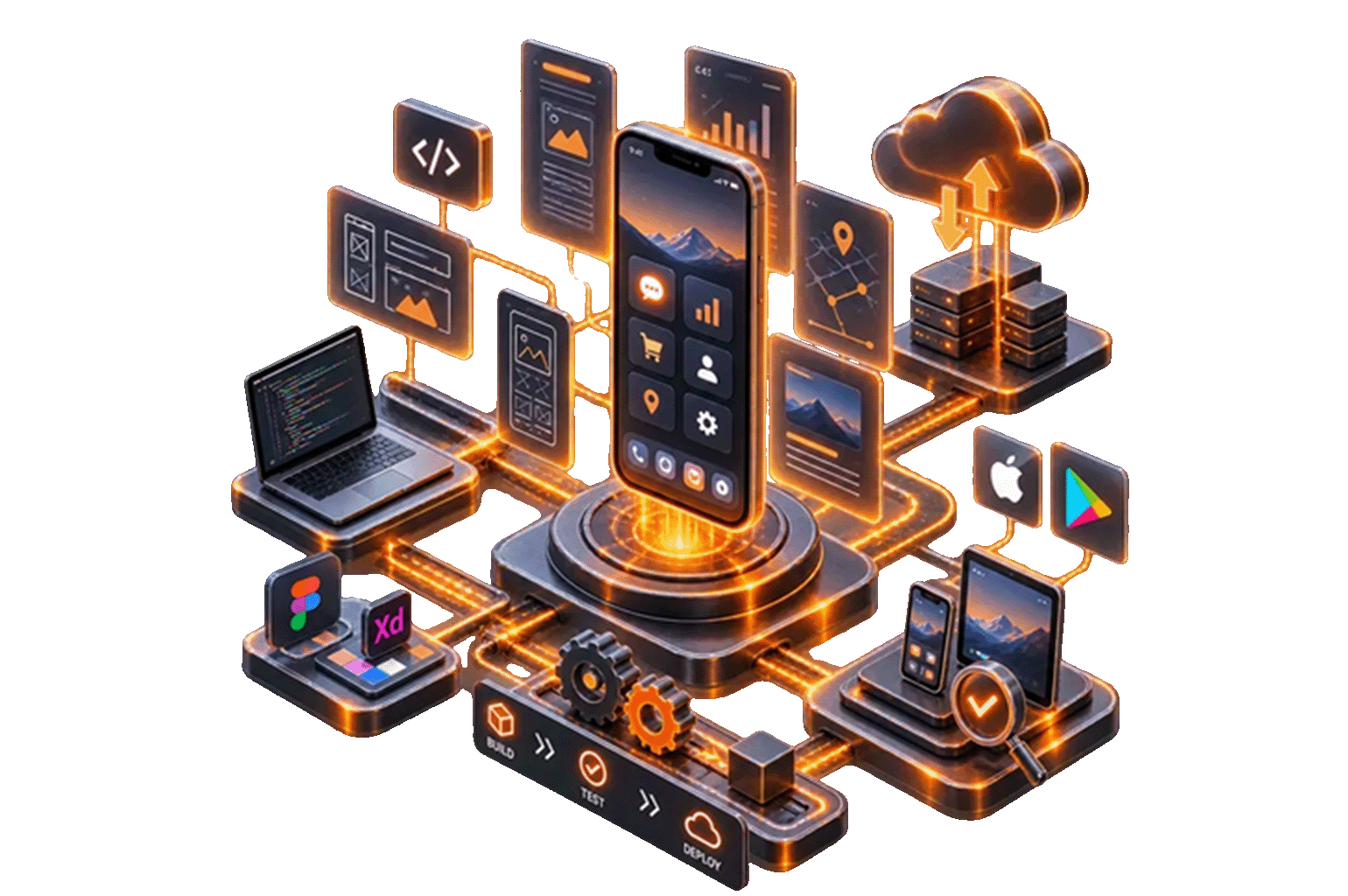
Malayan approaches mobile delivery as an end-to-end engineering problem — balancing user experience, application architecture, integration, security, performance, release management and long-term maintainability.
The mobile application, its service layer and the systems behind it are designed as one operating environment rather than separate technical projects.
Translate business workflows and user needs into focused mobile journeys, interaction patterns and application structures designed around real tasks rather than desktop screens compressed onto a phone.
Engineer maintainable applications across the major device ecosystems with platform-appropriate behaviour, responsive interfaces and a deliberate balance between shared application patterns and platform-specific implementation where the product requires it.
Connect mobile experiences to enterprise services, authentication, transactional workflows, data platforms and external capabilities through explicit, governed interfaces.
Structure environments, build pipelines, device-aware validation, release controls, telemetry and operational handover so the application can move into production safely and continue evolving after its first release.
The device experience sits at the edge of a larger architecture. Clear boundaries between presentation, application services, integration and enterprise systems make the solution easier to secure, scale and change.
A representative architecture separates concerns while preserving a controlled flow from the user action on the device to the business capability that fulfils it.
Controls are designed into the architecture instead of added only at the application edge.
Mobile applications operate across changing networks, device states, operating-system constraints and release cycles. The engineering model must account for those conditions explicitly.
Interaction structures designed for compact screens, touch input, clear content hierarchy and usable task flows across representative device conditions.
Controlled handling of session, local state, background/foreground transitions and interrupted user journeys.
Deliberate use of notifications, local device services and operating-system capabilities only where they support the product workflow.
Application states that account for latency, weak connectivity, interrupted requests and temporary service unavailability.
Payload and interaction design aligned to mobile performance and backend constraints.
Clear ownership, retry behaviour and reconciliation when data is cached or updated across device and service boundaries.
Defined development, testing and production paths for application and service changes.
Versioning, validation and rollout practices aligned to the realities of mobile distribution and operating-system change.
Telemetry and diagnostics that help teams trace failures, understand performance and identify behaviour across application and service boundaries.
Mobile security is not limited to the login screen. Identity, local data handling, device permissions, service communication, release controls and production visibility need to be considered as one delivery model.
Authentication, authorisation, session state and access behaviour are aligned to the sensitivity of the business functions exposed through the mobile channel.
Data exposure, transport, caching and local persistence are designed to minimise unnecessary handling of sensitive information on the device and across service boundaries.
Device capabilities are scoped to the application requirement, while builds, environments, versioning and production changes follow defined validation and release paths.
Application and service telemetry helps teams trace failures, diagnose performance issues and understand behaviour across the full mobile transaction path.
The delivery model combines product thinking with architecture and engineering controls so the application is designed to operate, not only to launch.
Clarify target users, business processes, application goals, integrations, device assumptions and operational constraints.
Define mobile journeys, application structure, service boundaries, data flows, security expectations and release approach.
Implement the mobile experience, APIs, backend services, integrations and environment configuration around the agreed architecture.
Validate functional behaviour, integrations, security, performance, interruption states and representative device and network conditions before release.
Move through defined distribution channels, establish production visibility and use operational evidence from the application and its services to guide subsequent versions.
These examples illustrate common mobile application scenarios the practice is designed to support. They are representative patterns, not claims of specific client deployments.
Mobile experiences that provide customers or members with secure access to services, transactions, status information, content and account capabilities.
Mobile tools for employees and operational teams who need task execution, data capture, approvals or workflow access away from the desktop.
Focused mobile channels that expose selected capabilities from existing business applications without recreating the entire enterprise system on a device.
Applications that coordinate mobile interaction with external services, notifications, identity, payments, location or other digital ecosystem capabilities where required.
An engagement can begin with a new mobile product, an existing application that needs structural improvement, or an enterprise platform that needs a secure mobile channel.
Define the user journeys, architecture, services and delivery model as one coordinated product engineering initiative.
Rework application structure, service dependencies, performance or release practices around a clearer target architecture.
Create a focused mobile channel around existing enterprise systems while keeping core logic, data ownership and integration boundaries explicit.
Mobile Application Development brings enterprise software, cloud platforms, intelligent services and integration capabilities to users through a focused device experience — while keeping the underlying systems engineered as one coordinated platform.
Talk to Malayan about mobile architecture, iOS and Android engineering, backend integration, device-aware validation and the delivery controls required to operate a secure, maintainable mobile channel.